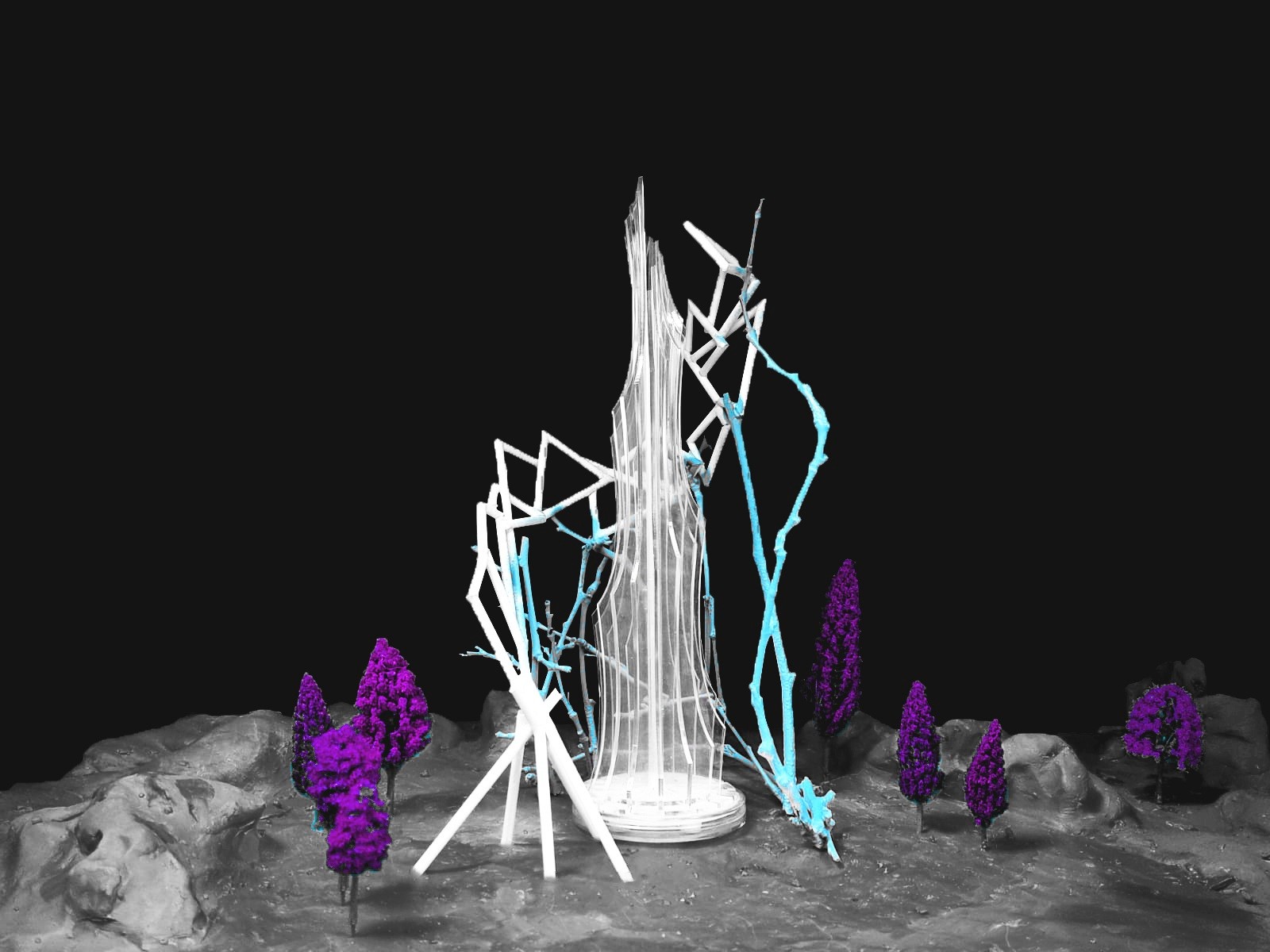
A modular installation built from the cardboard correspondence between Seoul and London.
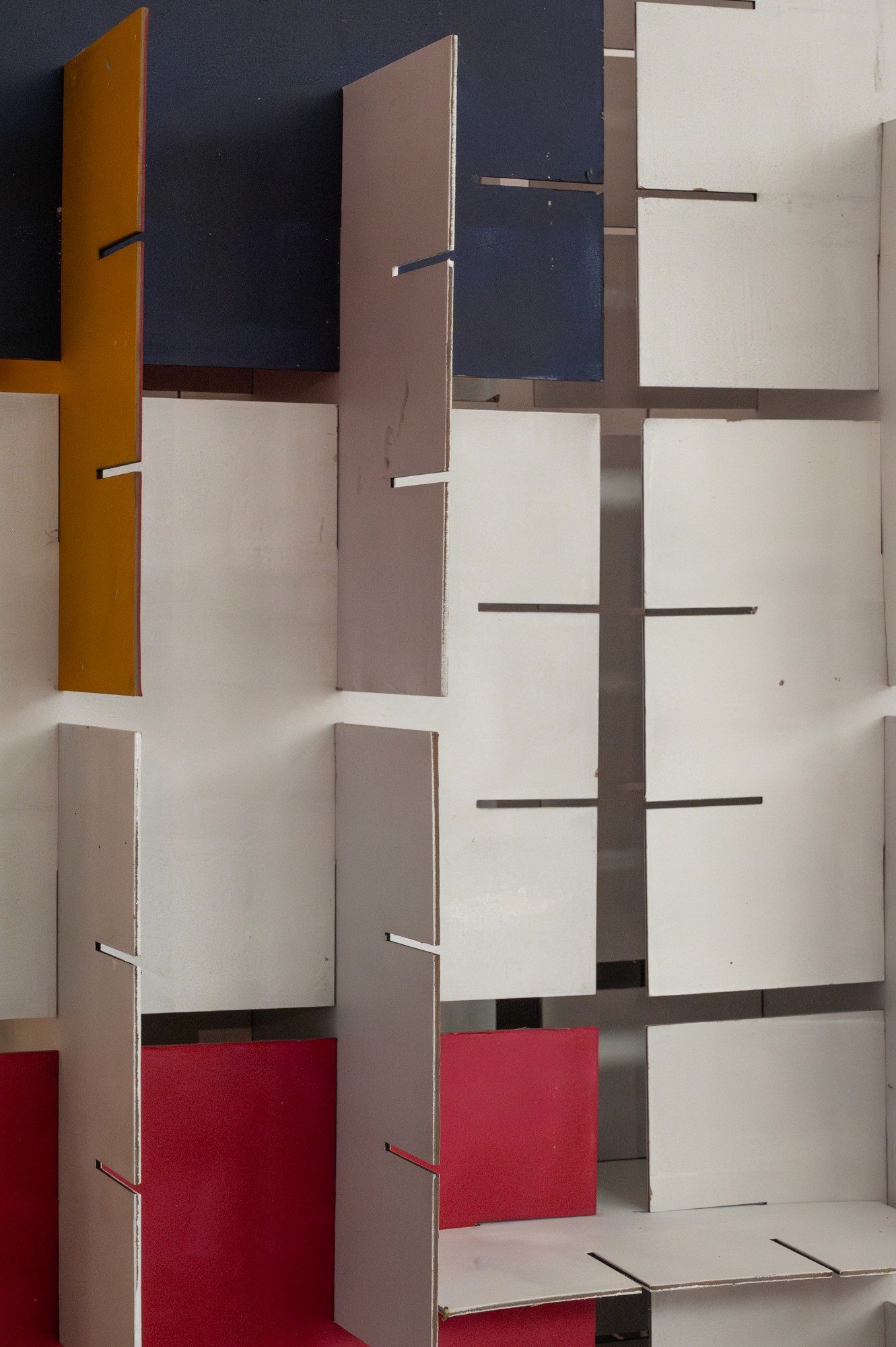
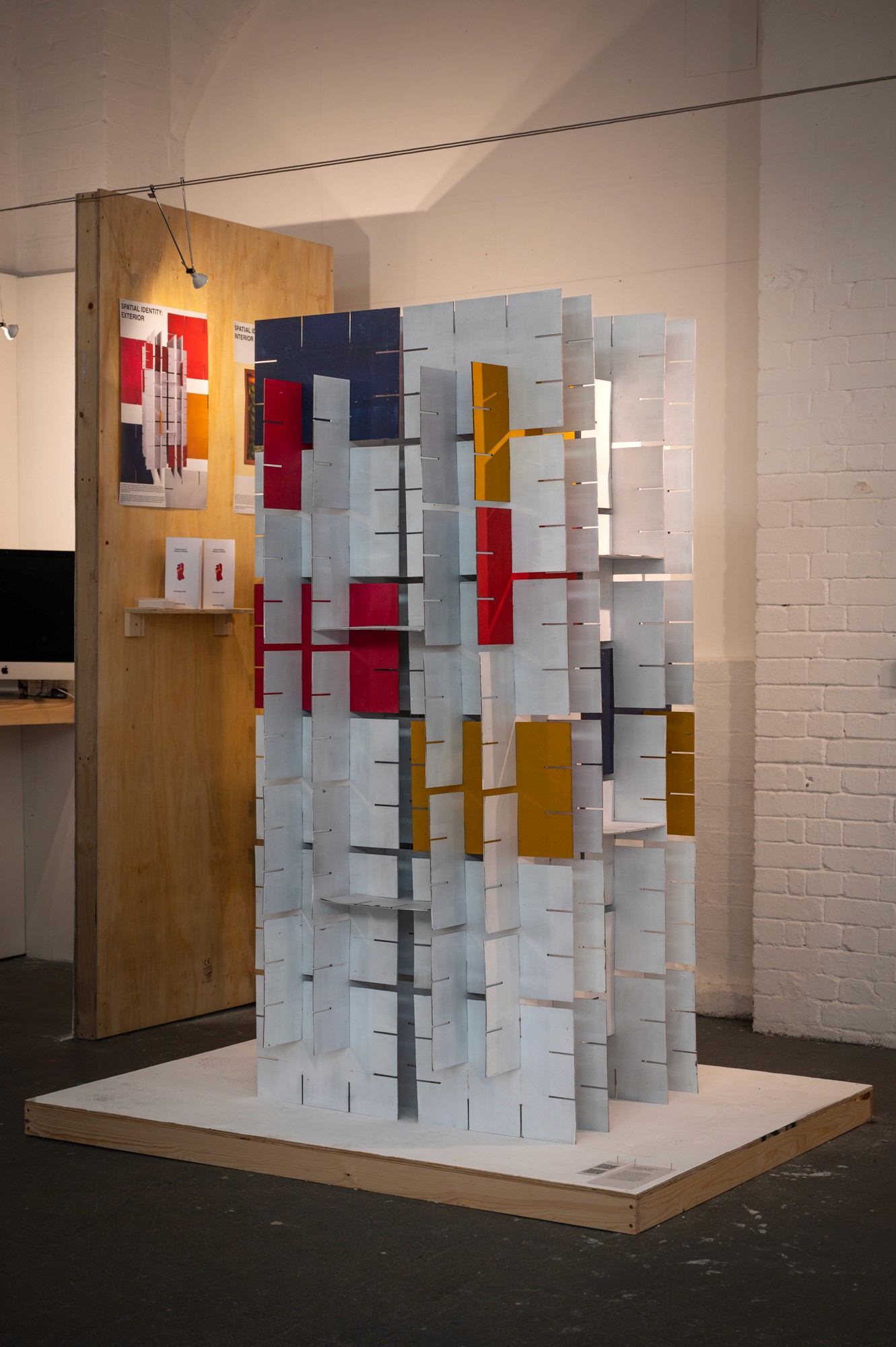
Spatial Identity is a self-initiated installation built from reused cardboard boxes collected over time. Each box was disassembled, catalogued, and rebuilt into a Mondrian-inspired modular structure, turning a personal archive of material into a measurable spatial system.
- Role
- System Design · Fabrication
- Category
- Installation
- Context
- Goldsmiths, University of London
- Year
- 2025
- Tools
- Cardboard · CAD
- Credits
- Goldsmiths, University of London
Conceptual Origin
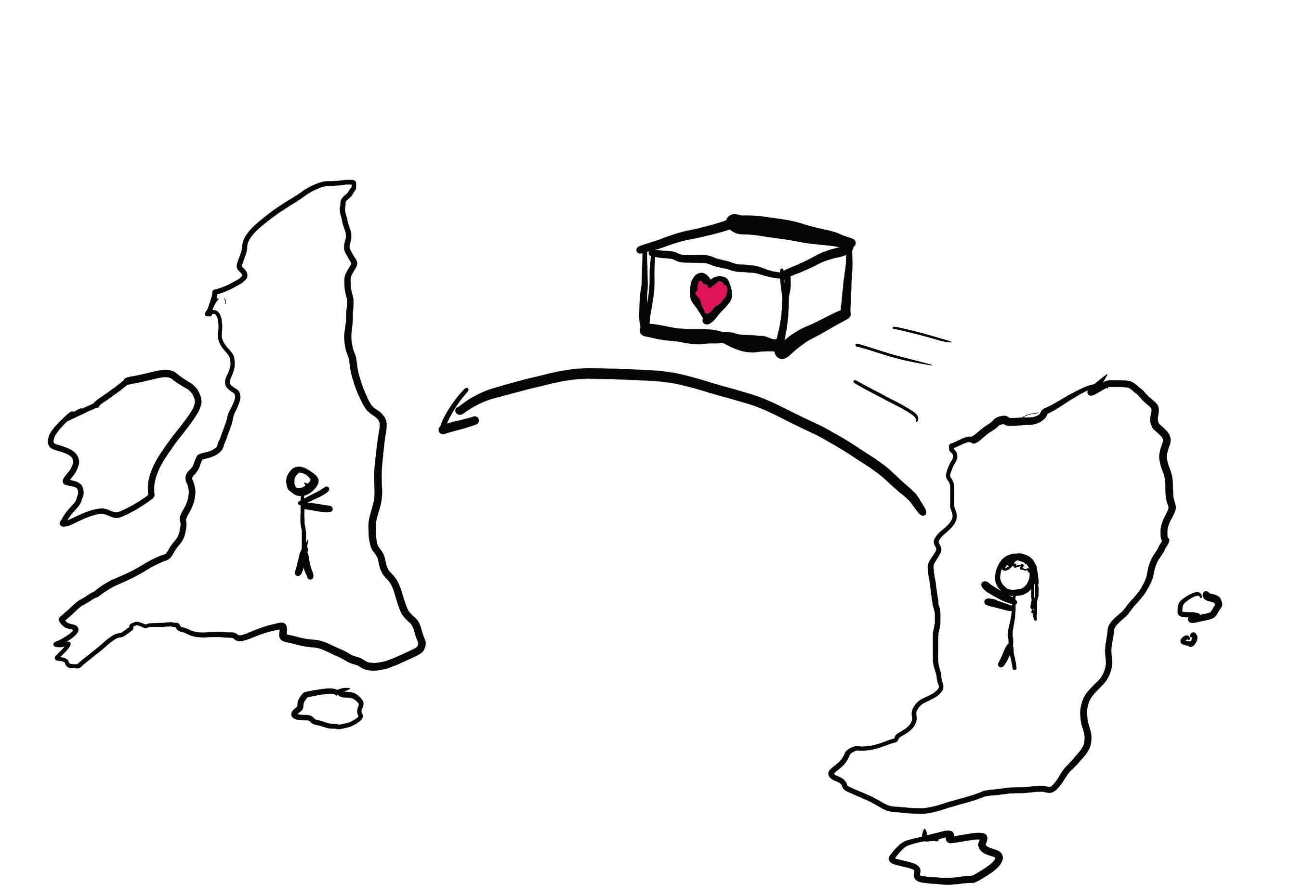
The project began with cardboard boxes sent by my mother from Korea while I was living in London. After the food, gifts, and handwritten notes were removed, the empty boxes remained as physical records of distance, care, and repetition. I began treating them not as packaging, but as architectural material.


Material Translation
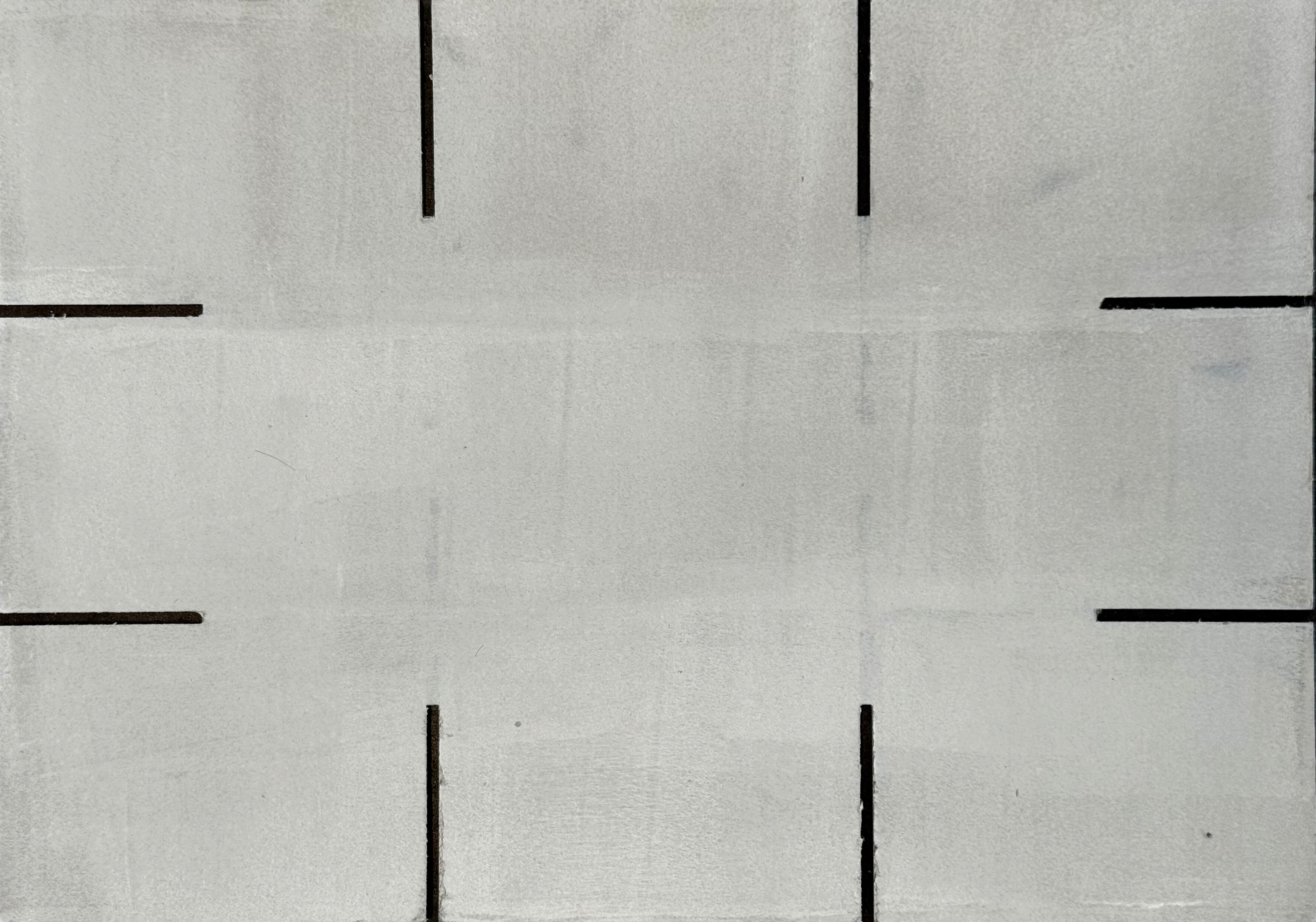
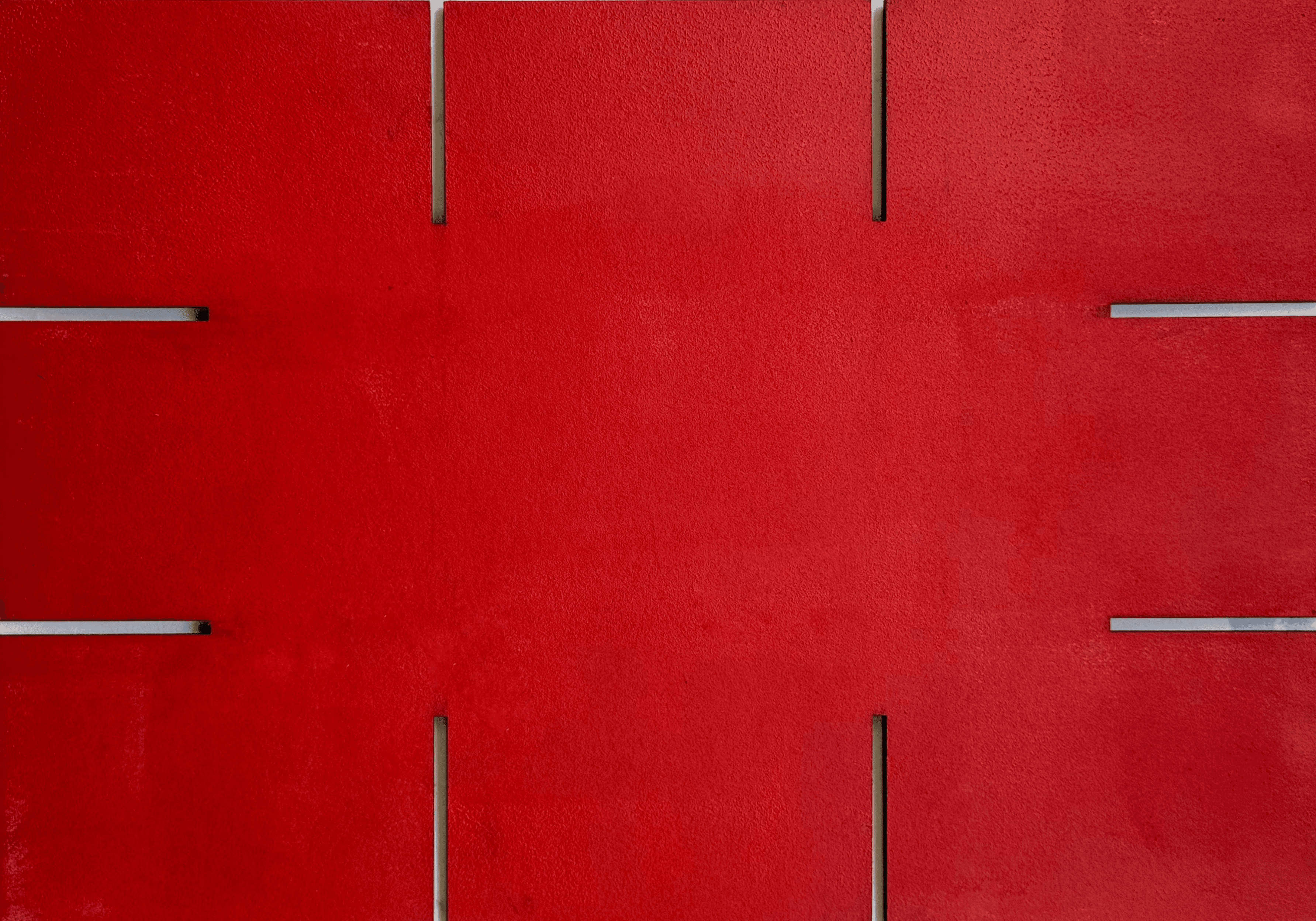
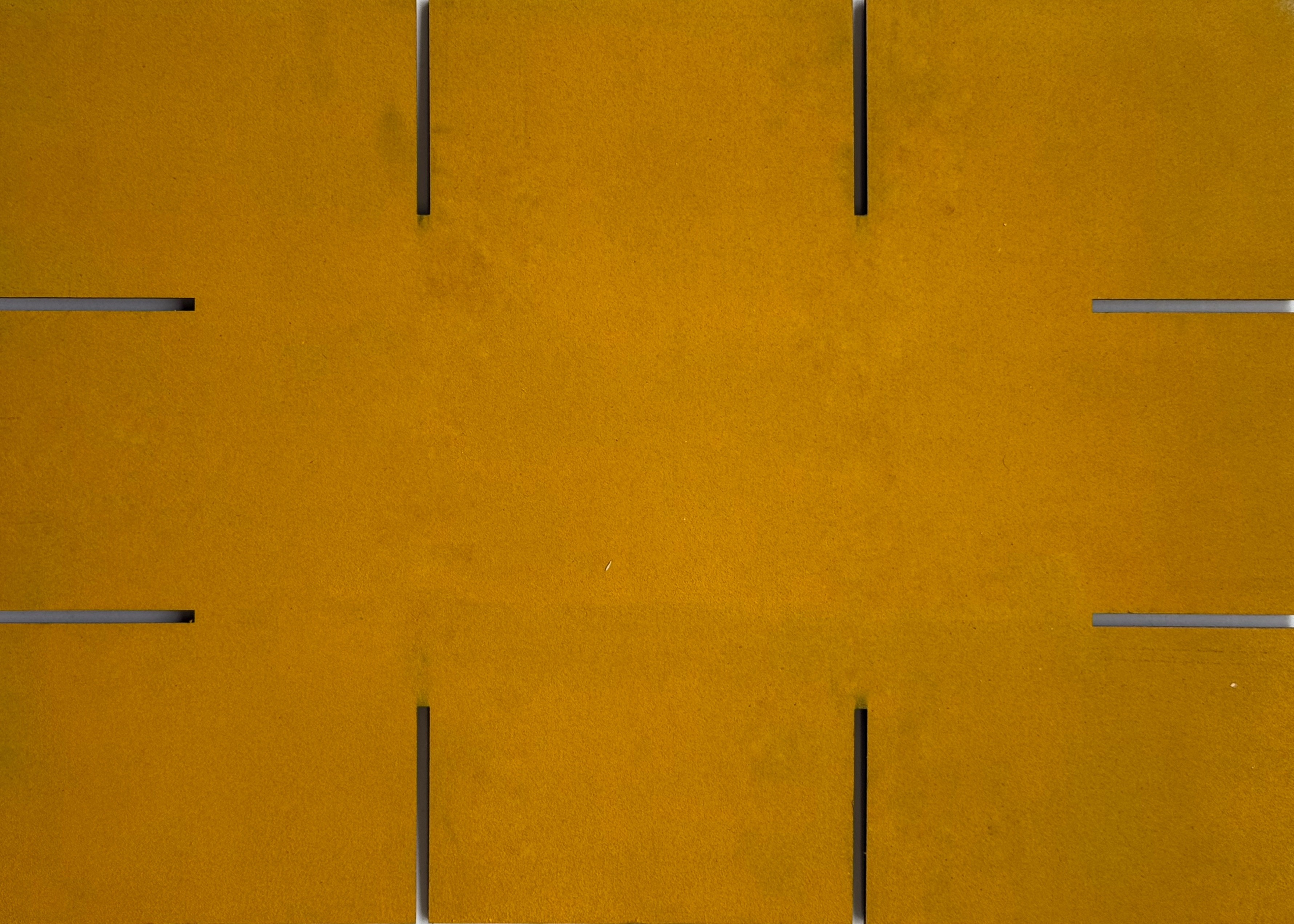
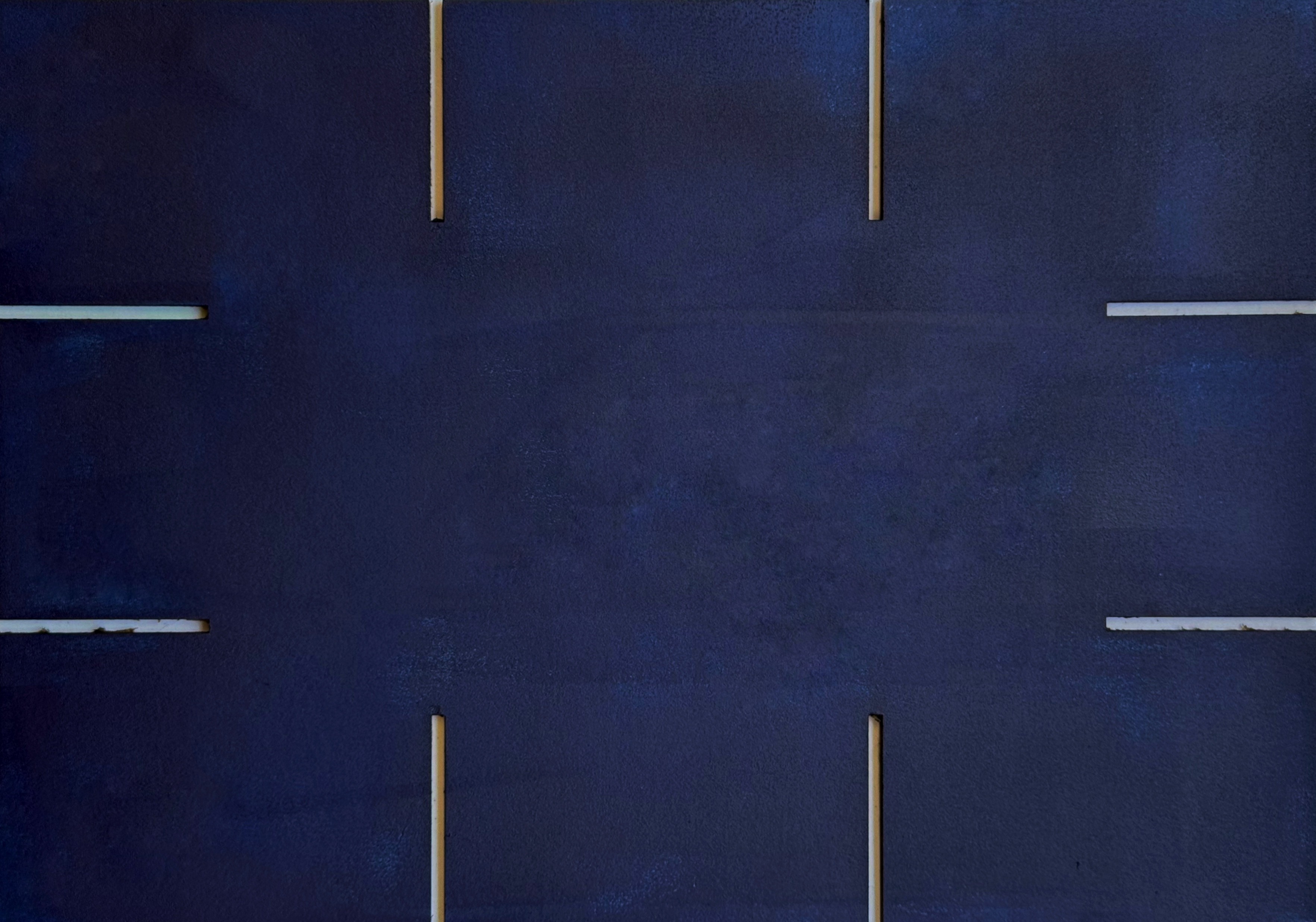
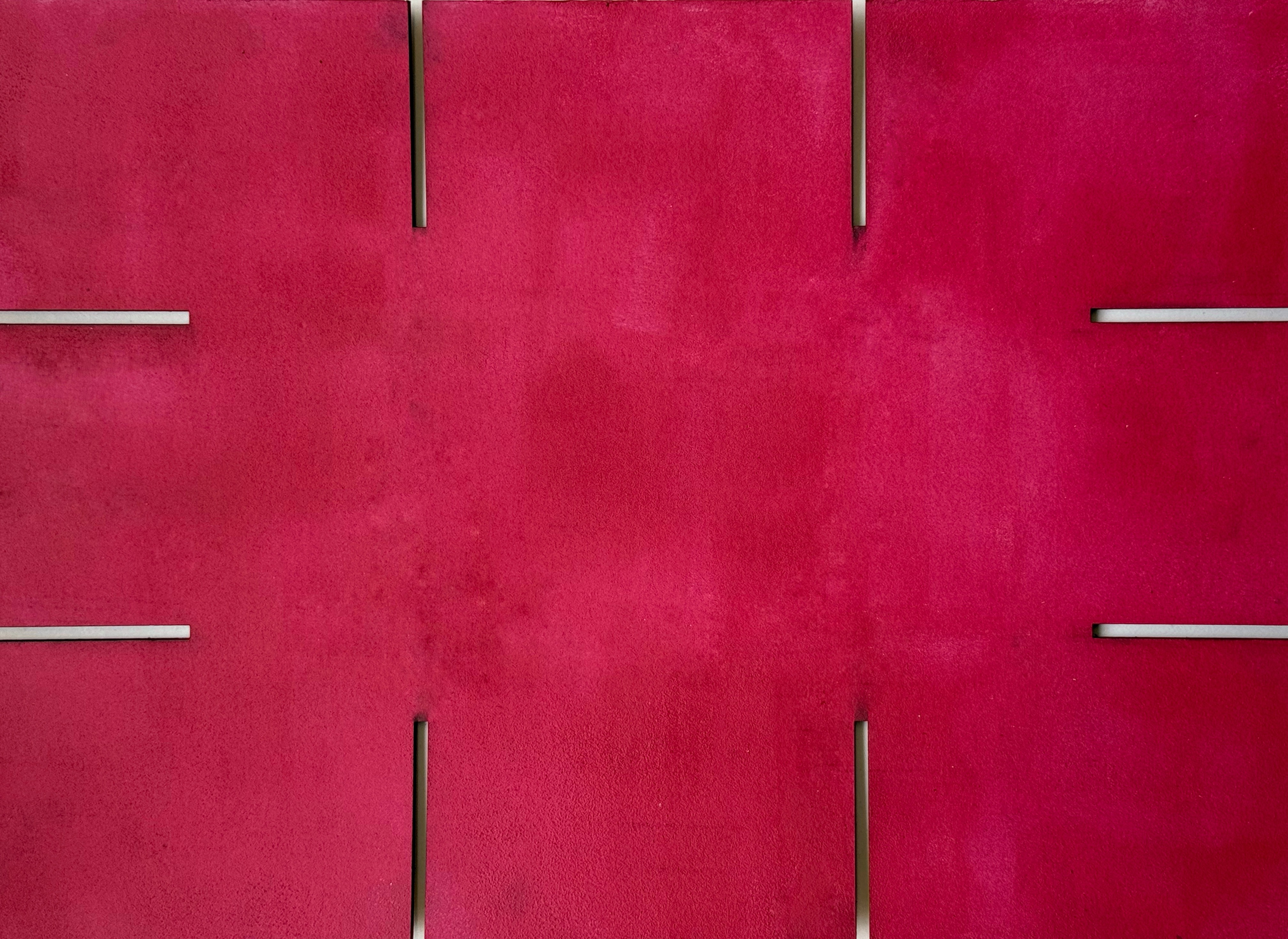
The visual language borrows from Mondrian's use of primary colour, grid, and balance. Instead of applying this reference decoratively, I used it to organise the boxes into a modular system. The original folds, marks, and seams were kept visible to preserve the history of each package.

Modular Construction
Each box was opened, measured, and grouped by size, weight, and origin. I used CAD to map the modular structure, then cut and assembled the final units by hand. The process balanced digital planning with the irregularity of the original material.

Spatial Reading
The final installation turns repeated acts of sending into a physical environment. Viewers move around a structure built from materials that once travelled between two homes, making distance, care, and memory visible through form.