Designing Spaces that Connect.
A research-led editorial project exploring love, care, and belonging through Korean domestic architecture. The work moves between public buildings, intimate homes, and the urban shift from hanok to high-rise, considering how spaces are designed to connect people.
- Role
- Research · Writing
- Category
- Writing / Research
- Context
- Goldsmiths, University of London
- Year
- 2025
- Tools
- Adobe InDesign · Research
- Credits
- Goldsmiths, University of London
Brief
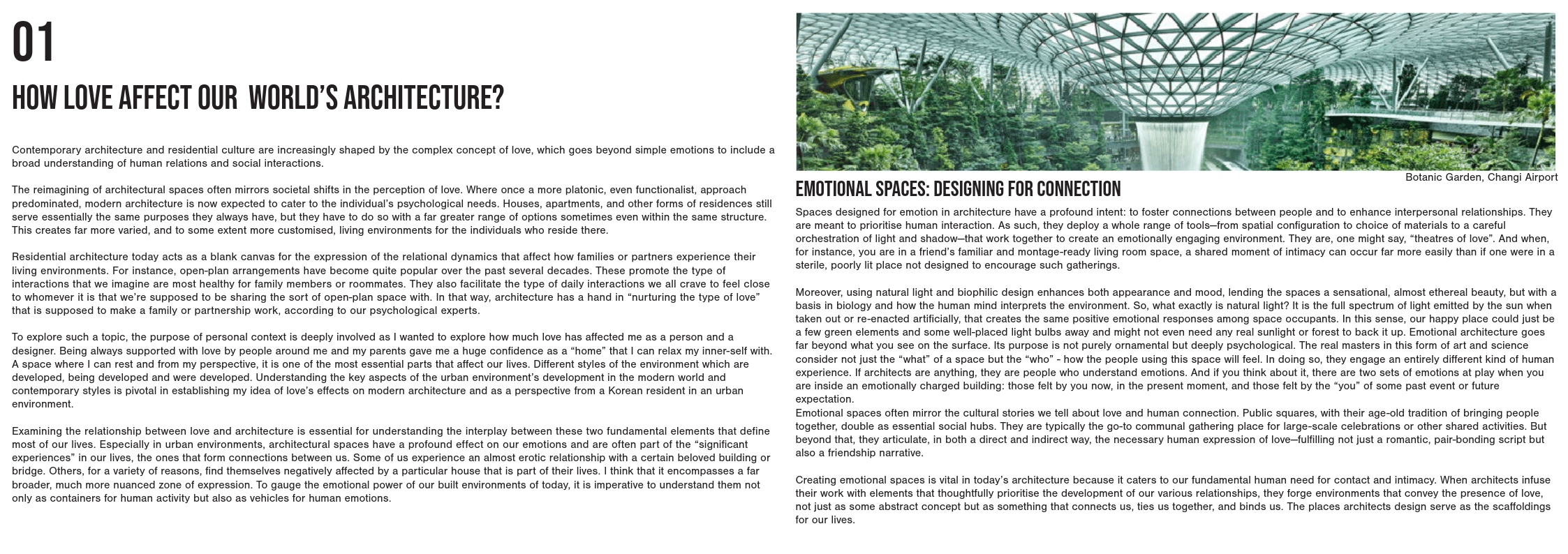
This essay was written during my time at Goldsmiths as a contextual studies project, asking how love — understood broadly as care, attachment, and belonging — shapes the spaces we live in. Taking a Korean-born, London-based perspective, the text moves between architectural theory, public buildings, and the residential culture of South Korea.
Conceptual Approach
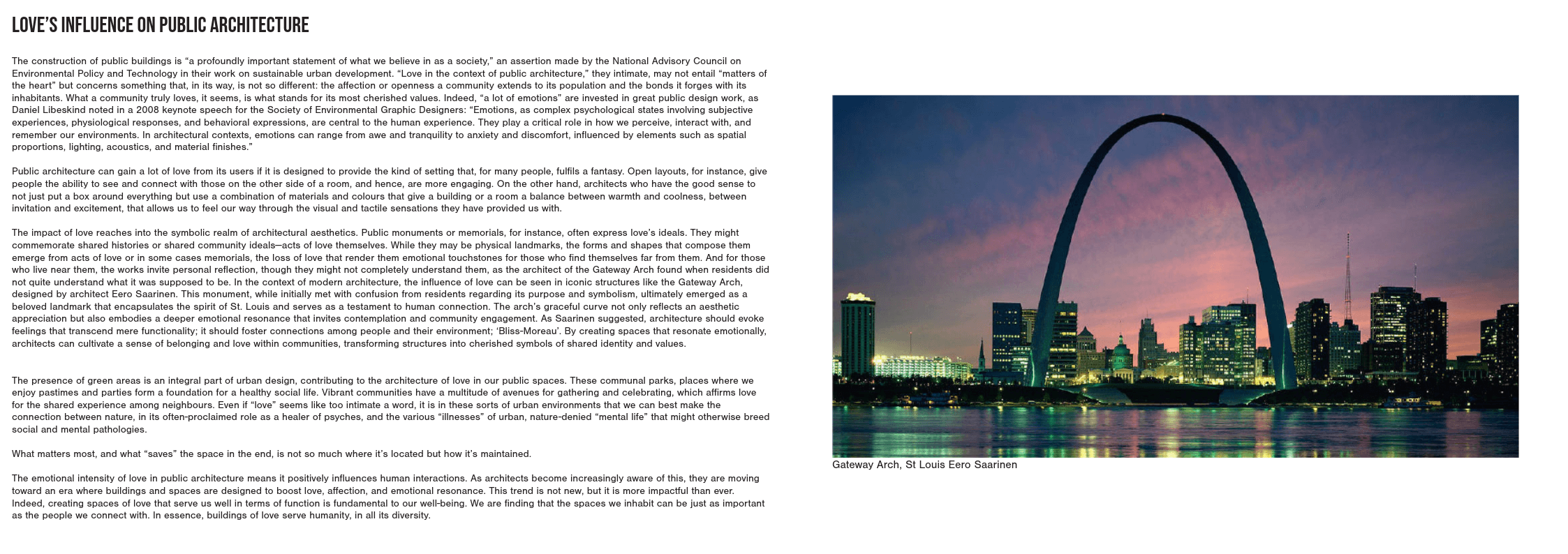
Rather than treating love as romance, the essay frames it as a design force — the basis for how architects choose materials, shape light, and configure interior and public space to foster connection. Case studies range from the Gateway Arch to the Taj Mahal, examining how emotion is embedded in iconic and everyday architecture.
Korean Residential Lens
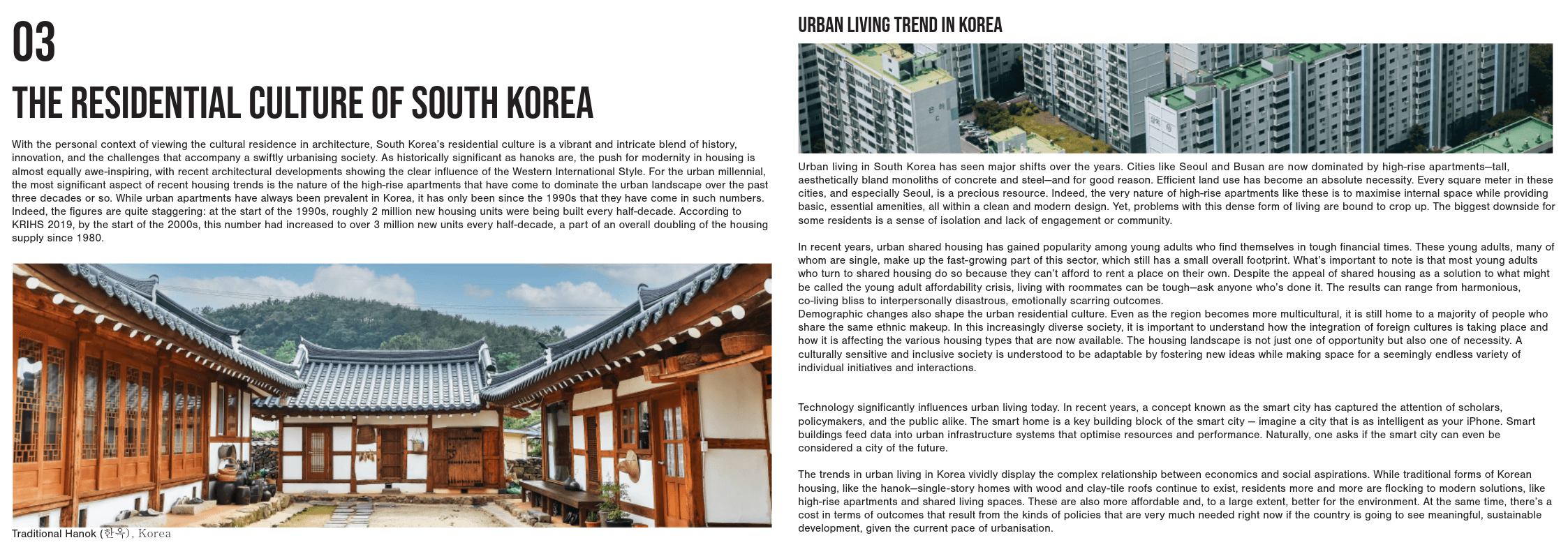
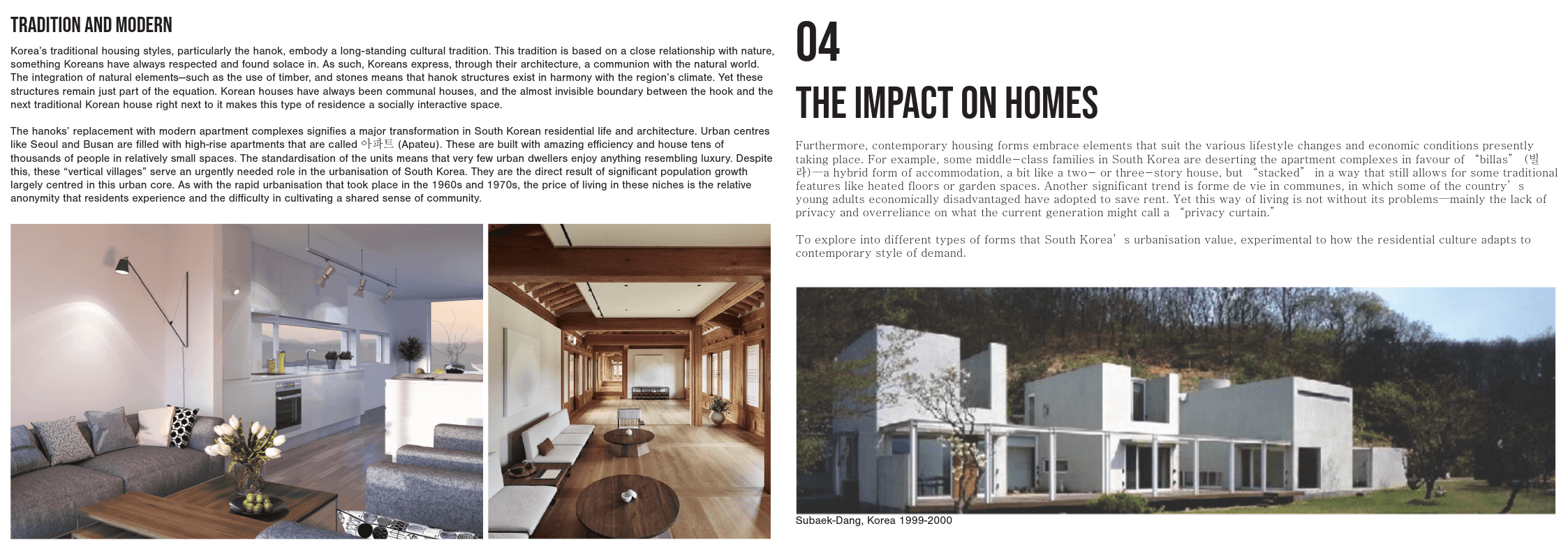
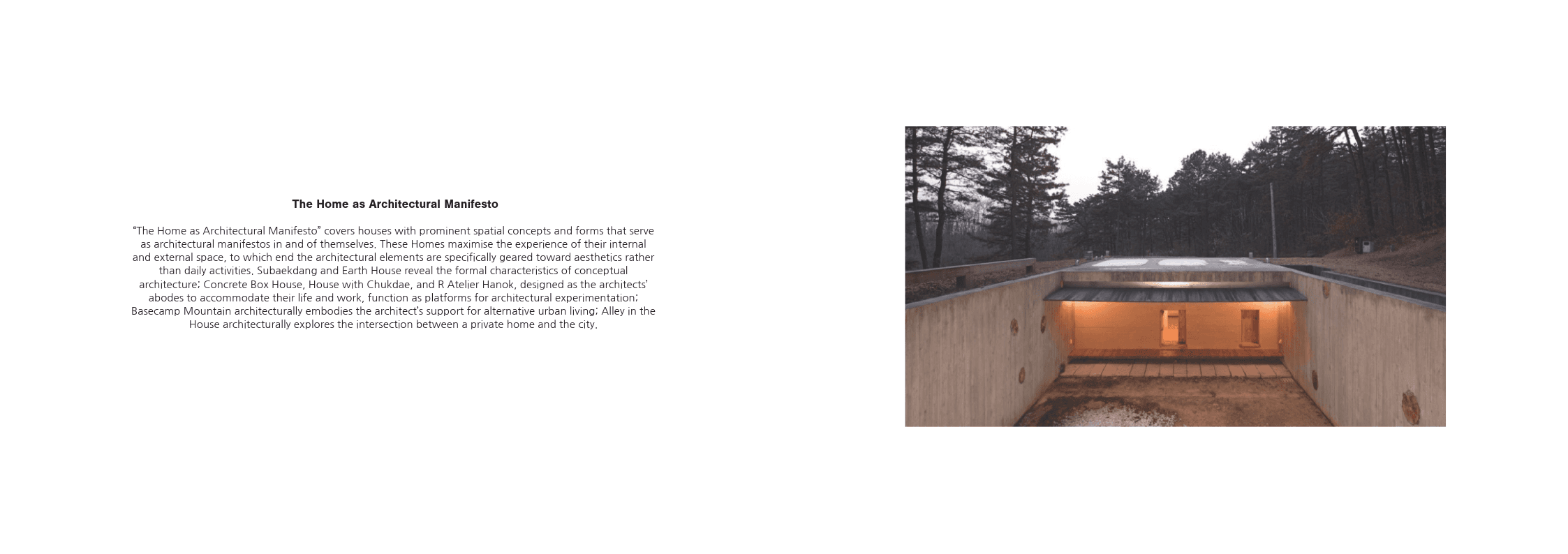
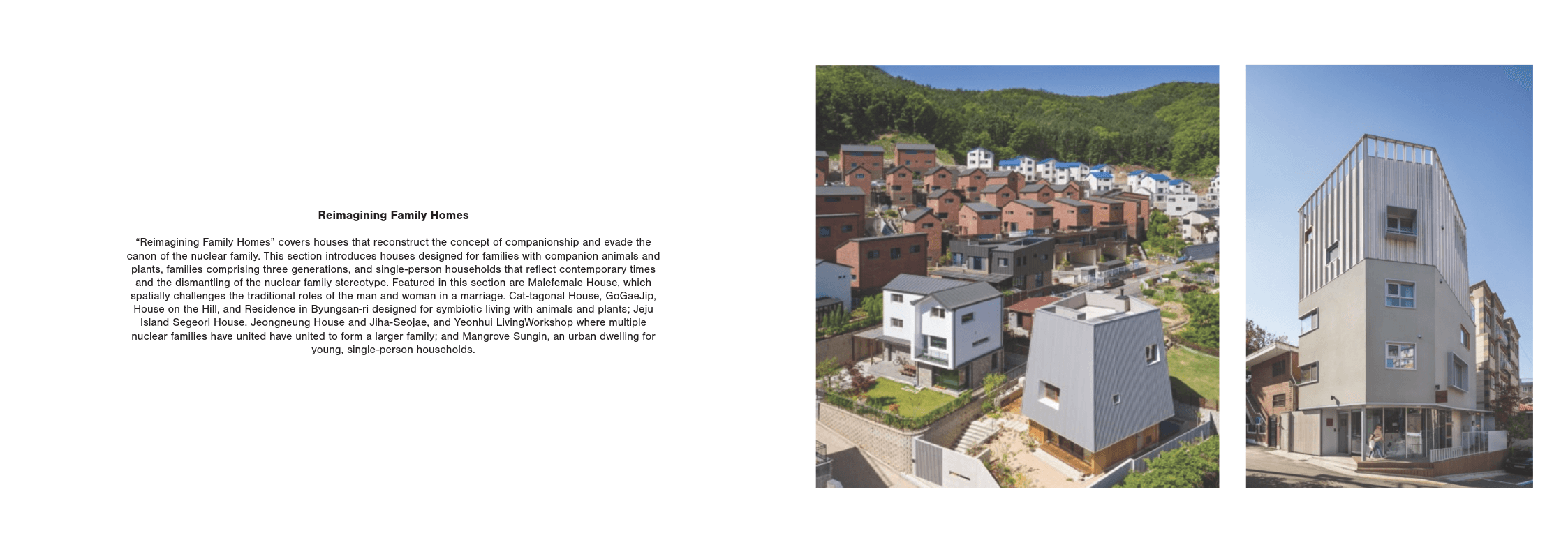
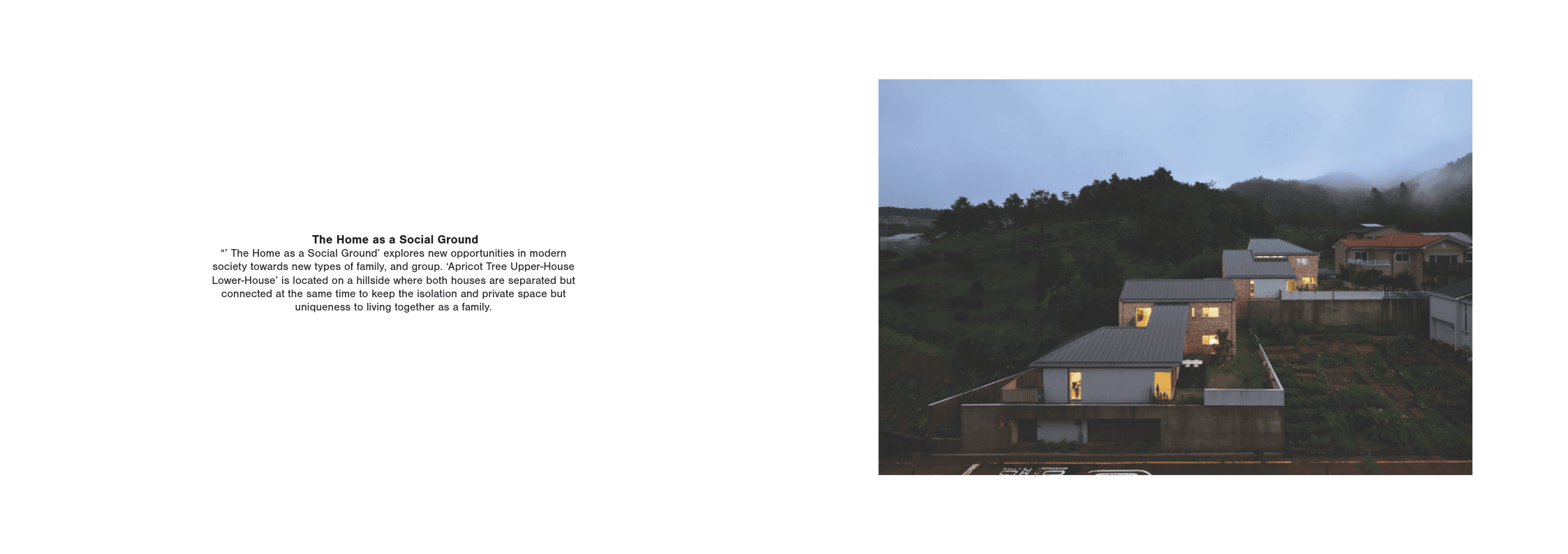
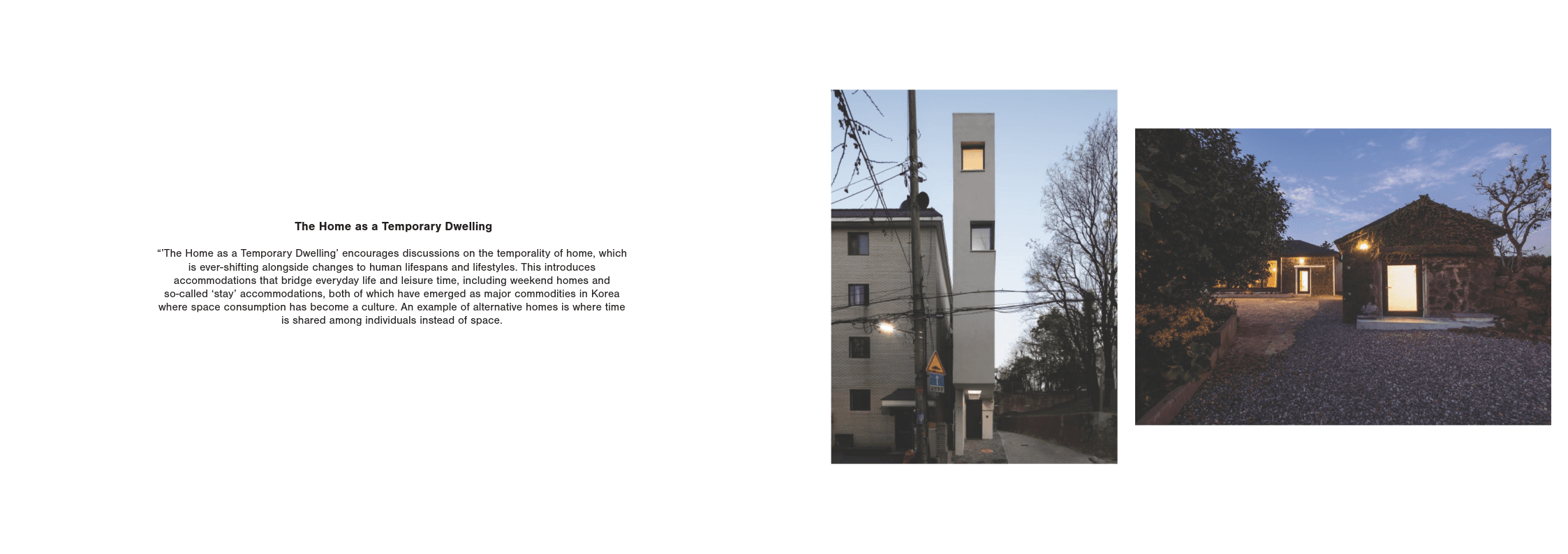
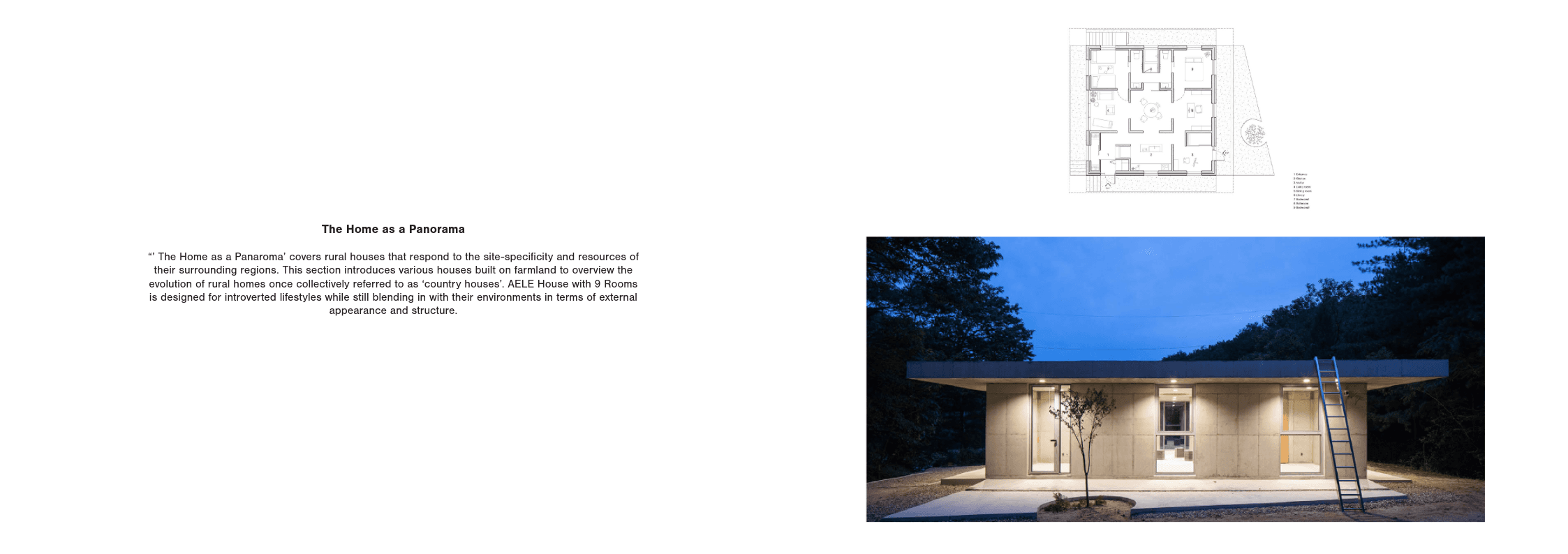
A central section traces South Korea's residential shift from the hanok to high-rise apartments, and the emerging alternatives like billas and shared housing. The argument: rapid urbanisation reshaped how families live, but the cultural pull toward connection and communal space persists in the way Korean homes are designed and inhabited.
Outcome
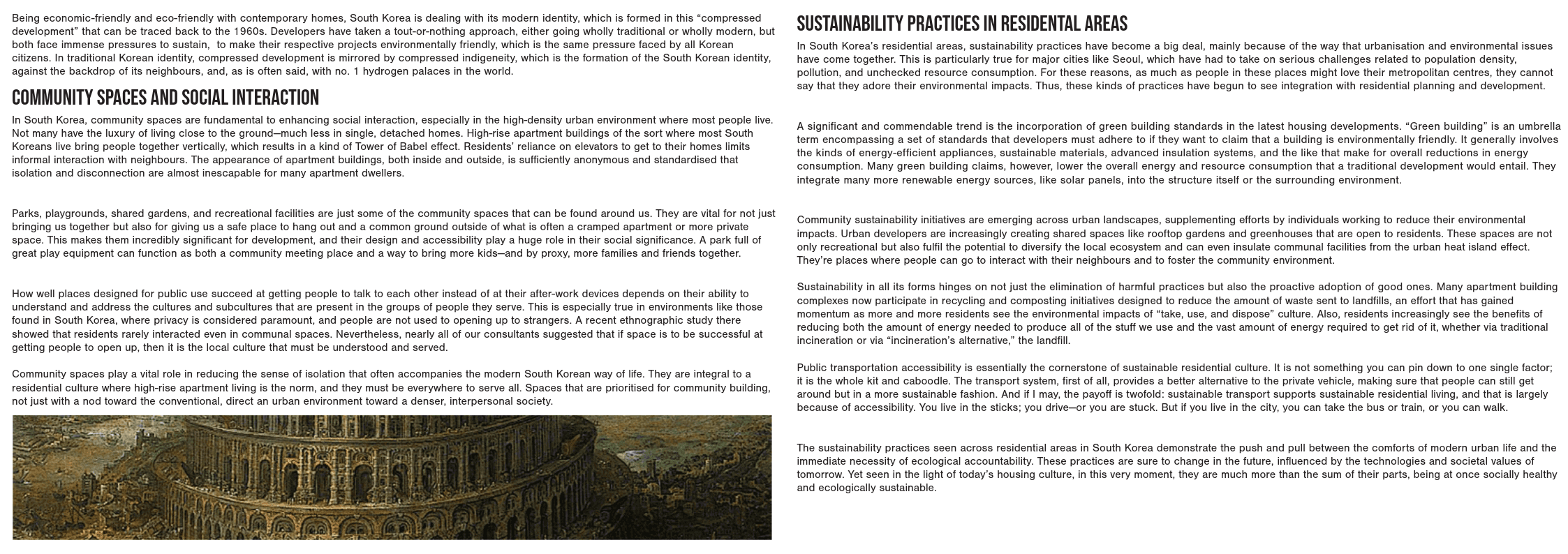
The final piece is a long-form essay with editorial layout, supported by an extensive bibliography drawing on architectural theory, the neuroscience of space, and Korean cultural studies. The work argues that architecture which prioritises emotion and connection produces more livable, resilient cities.