View Project
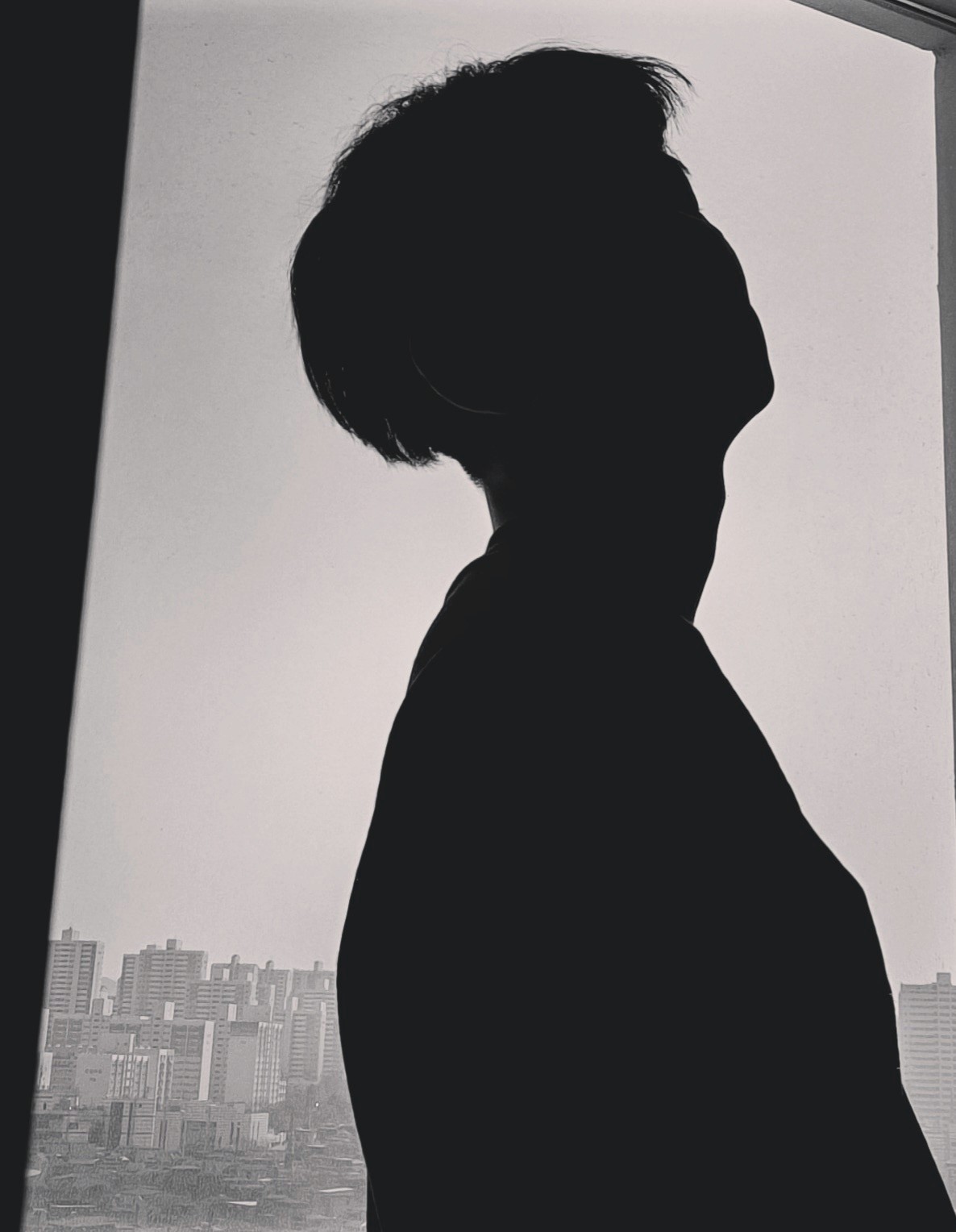
When I went to Goldsmiths, I expected design school to teach me how to use software better, sketch faster, render more convincingly. Three years later, I can tell you that none of those things turned out to be the lesson.
What the course actually trained was how to look at something before deciding what to do with it. It sounds simple. In practice it took me years to do it without being prompted.
The Spatial Identity project is the easiest example I can give. I worked with cardboard boxes my mother had been sending from Korea to me in London for years. The first version was technically fine. I had measurements, a structural logic borrowed from Mondrian, a clean photograph at the end. It was thin. It did not say anything that the material was not already saying on its own. Once I started reading the boxes as objects sent across distance instead of just material, the project rebuilt itself.
The course was slow but persistent about pulling me out of that surface-level mode. Most of my early work was decoration. I was good at making things look composed without saying anything in particular.
The second lesson, which took longer, was about being wrong in public. Crit culture at Goldsmiths is intense in a quiet way. You pin up work that you have spent weeks on, and someone you respect tells you, with care, that the premise is off. It is uncomfortable, slow, and produces better work than any tutorial I could have read online. I learned to defend choices when I believed them and to drop them when I did not, which is harder than it sounds.
The third lesson, and the most useful for actual practice, is the habit of writing alongside making. Goldsmiths asks you to write throughout. Short briefs, longer essays, project statements. I resisted it for the first year. I thought design was supposed to be visual, and words were for people who could not draw. By the end of my final year, I had written a long contextual studies essay and felt, for the first time, that I was thinking with the writing rather than around it. Writing slowed my decisions down. It made me say what I meant. It made certain projects impossible to bluff through.
If I had to summarise: the course taught me to look before I designed, to defend or drop my decisions, and to use words to keep myself honest. None of that is software. None of it is style. It is closer to a quiet discipline about how to pay attention.
I left Goldsmiths in 2025. I do not romanticise it. There are things I would change about the course, and there are projects I would rather forget. But the part that has stayed with me is small and useful, which is probably the most you can ask of any education. I now design more slowly than I used to, and more carefully, and with less faith in my first idea. I think that is the lesson.
YGW
LET'S CREATESOMETHINGGREAT.
© 2026 Geonwoo Yang. All Rights Reserved.