View Project
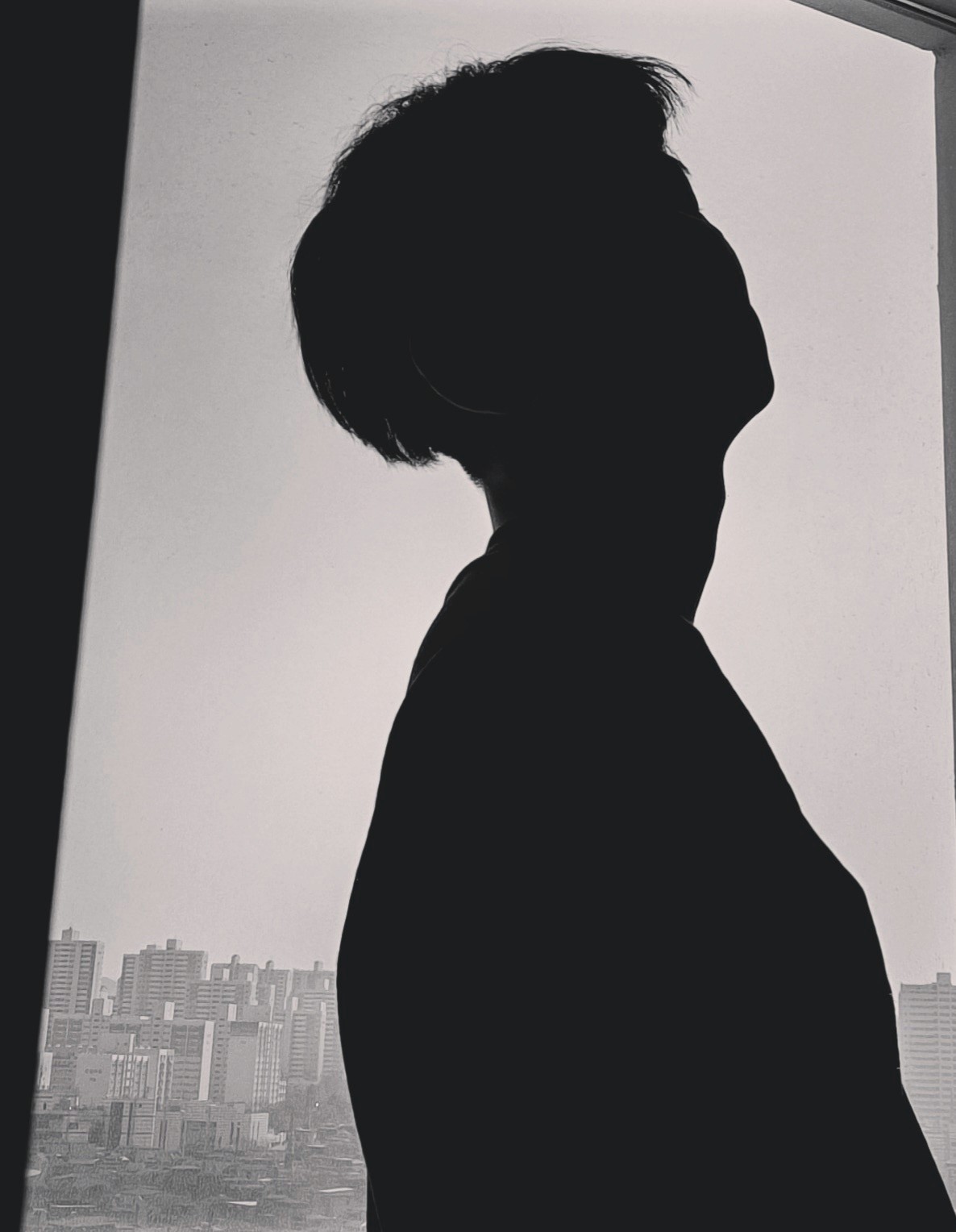
I was born in Bundang, just south of Seoul, in 2001. I moved to London in 2012, when I was eleven. That puts me at roughly twelve years in one place and eleven in the other, with most of my adult years on the London side. I am Korean. I am also, by now, partly something else. I have never found a clean word for what that something else is.
This is not an article about identity in a heavy sense. It is a small attempt to describe how that split shapes the way I notice things as a designer.
The first thing it changes is what feels normal. In Seoul, you grow up around very dense city. You take a lift to the eighteenth floor of an apartment and think nothing of it. Streets are narrow and busy. Restaurants are stacked vertically on top of each other, four floors of different food in a single column. London at first felt low to me. The streets felt wide. There was more sky than I was used to.
It took years for me to stop using one city as a reference point for the other. They are different in scale, density, light, smell, and tempo. I notice spaces on their own terms now. But I still notice them as someone who has two reference points instead of one. The comparison is not always useful. Sometimes it just keeps me from settling.
The second thing the split changes is what I assume people understand. Korean design culture is full of vocabulary that does not translate cleanly into English. London design culture has its own working assumptions, like irony, restraint, and a particular kind of confidence in critique. I have learned to move between the two. It made my early work uneven, because I would borrow tone from one and structure from the other without knowing it. By my final year at Goldsmiths I had started to read those borrowings on purpose, which is the beginning of a voice.
The third thing, and this is more practical, is what I notice in projects. My spatial work, like the Spatial Identity installation, came partly from my mother sending cardboard boxes from Korea over many years, and partly from a London life where those boxes had to be stored somewhere small and used somehow. The whole project sits in the space between two homes. I could not have made it from either side alone. I am increasingly aware that a lot of my work comes from this in-between position.
Living between two cities is not, in itself, an advantage. I have met designers from one place who see their place sharply, and designers from two places who see neither one clearly. It is not the geography that matters. It is the discipline of refusing to assume that the way you see things is the way they are.
What I would say, if I had to recommend something, is this. If you live between places, do not pretend to belong fully to one of them in order to look more legible to a studio. Studios worth working at are interested in how you actually see, not in how cleanly you can present yourself. The unfinished parts are where the work comes from.
I am writing this from London. I have a flight back to Seoul booked for later this year. By the end of the year I will probably notice things in one city that I would not have noticed without the other. That, more than any portfolio, is the real reason I keep moving between them.
YGW
LET'S CREATESOMETHINGGREAT.
© 2026 Geonwoo Yang. All Rights Reserved.